
What Makes Chicago Tavern-Style Pizza Different?
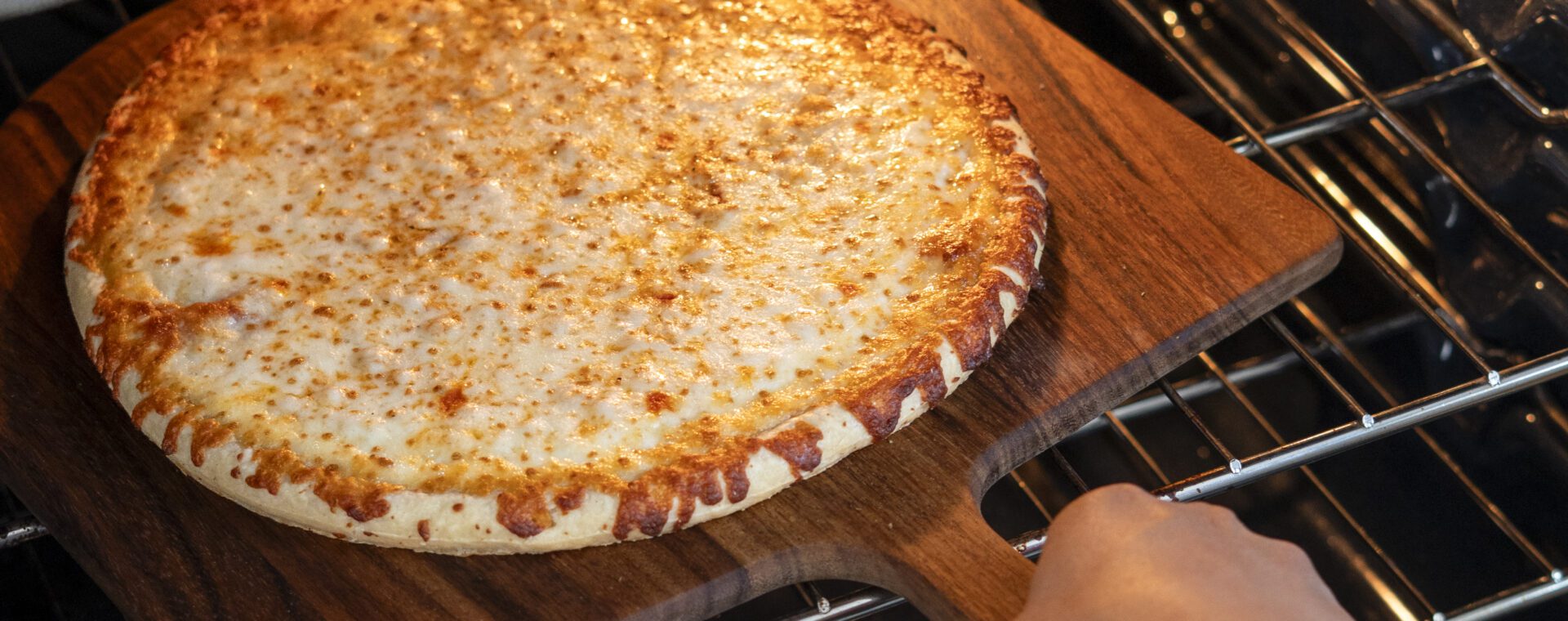
Chicago tavern-style pizza stands apart through a recognizable combination: a thin, crisp crust, a round pizza cut into small squares and an easy-to-share format rooted in Chicago neighborhood pizza culture. It is the Chicago thin-crust pizza tradition that can get overlooked when the city is associated only with deep dish.
No single feature tells the whole story. A thin pizza is not automatically tavern-style, and cutting a pizza into squares does not transform it by itself. The crust, cut and way the pieces are served work together to create the style.
Chicago tavern-style pizza is a thin, crispy pizza cut into small squares (party cut) and traditionally served in Chicago neighborhood taverns.
Why Chicago Tavern-Style Pizza Has a Thin, Crisp Crust
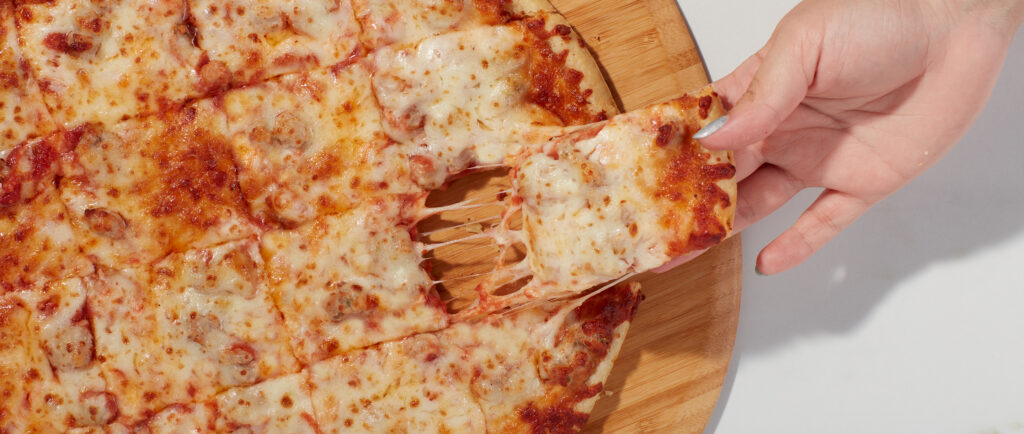
Tavern-style pizza has a low, thin profile and a crust with enough crispness to support sauce, cheese and toppings without becoming a thick, bread-forward base. That crisp structure also helps the smaller pieces hold their shape once the pizza is cut.
The lower profile changes the balance of the pizza. Instead of surrounding a deep filling, the crust works as a crisp platform beneath the toppings. The finished pizza is flatter and easy to divide into small pieces, which naturally supports the party-cut format.
The texture is not identical at every pizzeria. Some crusts may be especially firm or cracker-like, while others are more delicate or flaky. “Cracker-like” can be a useful description, but it is not a mandatory technical standard for every tavern-style pizza.
The broader distinction is a thin, crisp base rather than a tall or soft one. A crispy thin-crust pizza supplies the foundation, but the cut and cultural context still matter.
The Square Cut Changes Every Serving
A square cut, also called a party cut, means slicing a round pizza into a grid instead of making wedge-shaped slices from the center. Because the grid meets a circular edge, the result is a mix of shapes and sizes. In other words, a square-cut pizza does not produce identical portions.
Center pieces have toppings from edge to edge and no outer crust. Edge pieces add a curved strip of crust, while the smaller corner pieces around the pizza’s perimeter provide compact bites. That variety lets people choose a piece according to appetite, preferred shape or how much outer crust they want.
The smaller portions also make a party-cut pizza easy to share. Guests can start with one or two pieces, pass the tray around and return for more without committing to a large wedge. That practical social appeal is clear without relying on one disputed story about exactly where or why the cutting method began.
Tavern-Style Pizza vs Deep Dish
Both styles belong to Chicago, but they create very different meals. Chicago deep dish is known for a bowl-like, high-sided crust filled with cheese, sauce and toppings. Tavern-style stays low and crisp, with its toppings spread over a much thinner base.
The cut reinforces the contrast. Deep dish is generally served in substantial wedges, while tavern-style uses many smaller squares. A deep-dish slice includes a section of the raised outer crust. A party-cut pizza gives diners a choice among center, edge and corner pieces, making portions more flexible.
This is not a contest over which style is more authentically Chicago. Deep dish and tavern-style simply represent two different branches of the city’s pizza culture.
Thin Crust Alone Does Not Define the Style
Thin-crust pizza is a broad category. It can be crisp or flexible, cut into wedges or squares and prepared according to many regional traditions. Tavern-style is more specific because it combines the thin, crisp profile with the party cut and a strong connection to Chicago’s neighborhood pizzerias and taverns.
It also helps to separate defining characteristics from common variations. The thin structure and square cut make the style recognizable. A particular dough formula, sauce seasoning, cheese blend, topping arrangement or level of crunch does not apply to every example.
That is why two tavern-style pizzas can look and taste different while still belonging to the same tradition. Individual pizzerias can make different choices about dough, sauce, cheese, toppings and preparation without losing the style’s basic identity.
Home Run Inn’s South Side Tradition
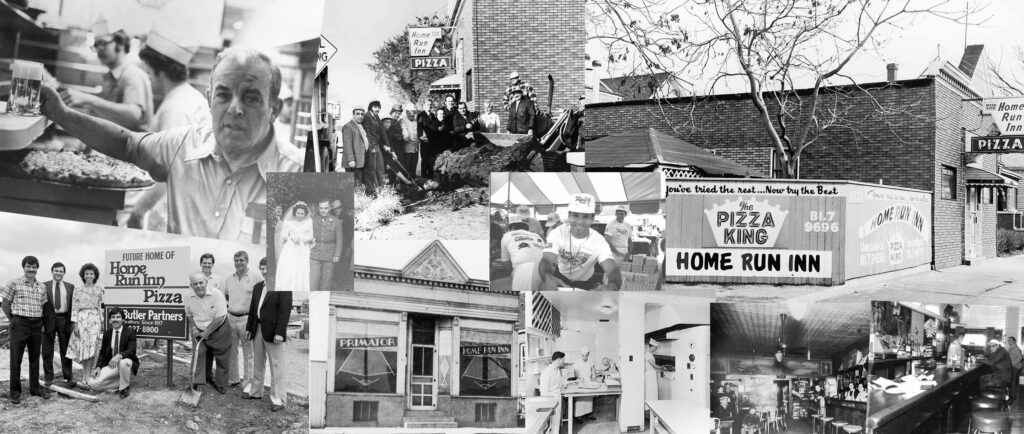
Home Run Inn offers an authentic example with roots on Chicago’s South Side. According to Home Run Inn’s history, Mary and Vincent Grittani opened the original tavern in 1923. Mary and her son-in-law, Nick Perrino, began serving the family’s crispy, square-cut thin-crust pizza in the early 1940s, and the tavern received the Home Run Inn name in 1947.
The family tradition continues in more than one setting. Home Run Inn serves handcrafted tavern-style pizza at its Chicagoland restaurants. It also carries that tradition into Home Run Inn’s frozen pizza lineup, which brings its family recipe to home freezers nationwide. Each has its own place in the Home Run Inn story.
Chicago Pizza Culture Goes Beyond Deep Dish
For anyone asking, “What is tavern-style pizza?” the answer is the full experience created by a crisp thin crust, a grid of varied square pieces, flexible portions and a connection to Chicago’s neighborhood pizza tradition. Remove the broader context, and “thin” or “square-cut” alone does not explain it.
Deep dish remains one of the city’s defining foods, but it is not the complete story of Chicago pizza styles. Tavern-style adds another distinctly Chicago answer: lower, crisper, cut for sharing and shaped by generations of local pizza-making.