
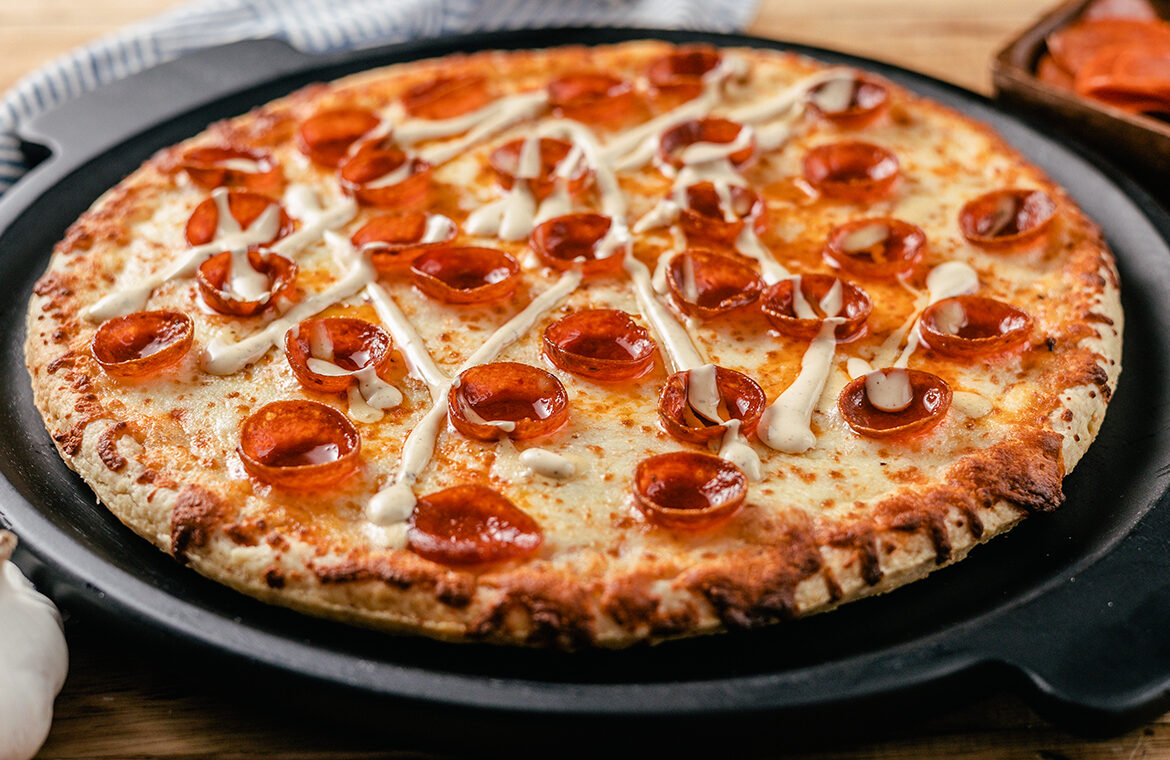
Tavern to Table: Chicago Style Pizza vs. Chicago Tavern-Style Pizza
Ask someone outside Chicago to picture Chicago-style pizza, and a tall, sauce-topped deep-dish pie may be the first thing that comes to mind. Ask a longtime Chicagoan what they grew up eating, though, and you may hear a very different answer: thin, crisp pizza cut into small squares. Both traditions belong to the city, but they deliver very different pizza experiences.
Understanding those differences comes down to more than crust thickness. Preparation, layering, baking, cutting and serving all help explain why Chicago has room for both deep dish and tavern-style pizza.
What Does Chicago Style Pizza Actually Mean?
Chicago style pizza is often used as shorthand for deep dish, but Chicago’s pizza culture is broader than one format. Deep dish became a recognizable local specialty in the 1940s, while thin-crust tavern-style pizza developed as a neighborhood tradition tied to bars, family pizzerias and casual group dining.
That distinction matters because the two styles are built for different experiences. Deep dish is thick, substantial and usually served in triangular wedges. Tavern style stays low and crisp, with toppings spread across a thin crust before the finished pie is cut into a grid of squares.
Together, they show why Chicago style pizza is better understood as a family of local traditions than a single recipe.
Deep Dish Chicago Style Pizza Starts With the Pan
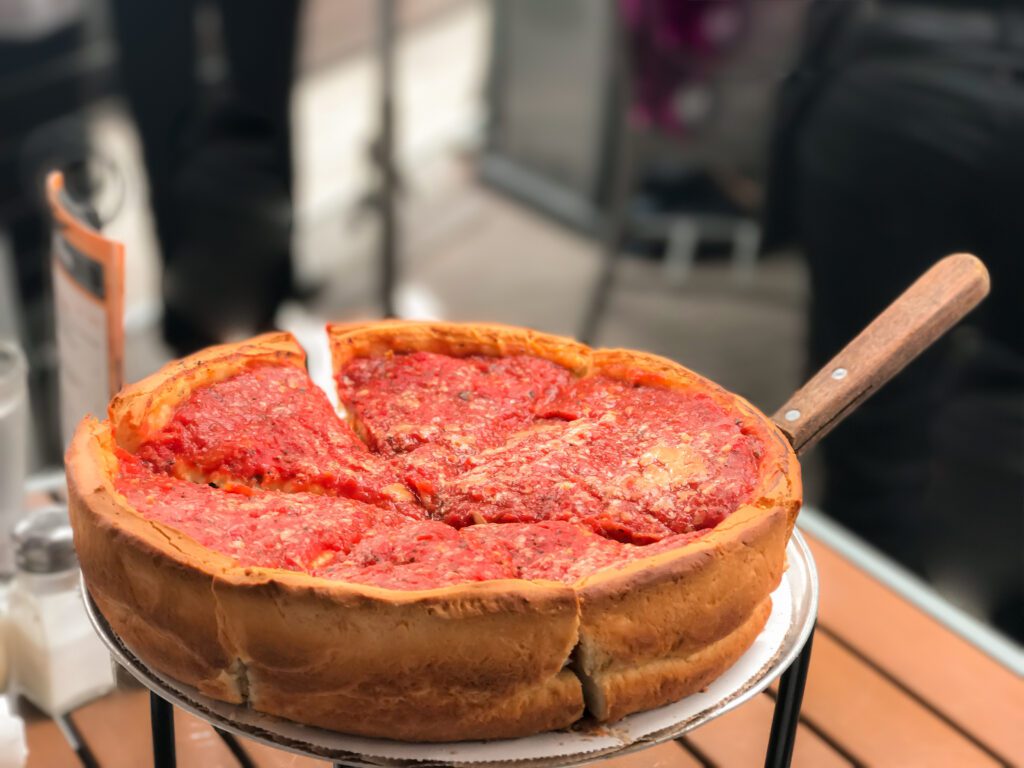
Deep dish is the version of Chicago style pizza that many visitors recognize immediately. Rather than stretching dough into a low, flat round, the dough is pressed into a deep pan so the crust rises up the sides and creates space for a heavier filling.
The layering is also distinctive, as cheese generally sits lower in the pie, with toppings above it and tomato sauce closer to the top. The construction gives deep dish its stacked, pie-like profile.
The Chicago History Museum traces Chicago-style deep dish to 1943, when Pizzeria Uno opened. The museum also describes the style as having a thick crust, generous cheese and a much longer cooking time than a thin pizza.
Because of its height and weight, deep dish is normally cut into wedges. It is a sit-down style of pizza that rewards a slower meal rather than the small, grab-and-share pieces associated with tavern cut.
Tavern-Style Chicago Style Pizza Keeps Things Thin and Crisp
Tavern-style Chicago style pizza takes the opposite approach. The crust is thin, the profile is low and the finished pizza is cut into squares instead of wedges. At Home Run Inn, that tradition goes back to the family’s South Side tavern roots.
According to Home Run Inn’s history, Mary and Vincent Grittani opened a small tavern on Chicago’s South Side in 1923. In the early 1940s, Mary Grittani and Nick Perrino began serving crispy thin-crust pizza at the tavern. The business was officially named Home Run Inn in 1947 after a baseball from a neighborhood game came through the tavern’s front window.
Home Run Inn describes its original family recipe as a hand-pinched crispy crust with sauce and plentiful cheese. The thin crust gives the pizza a firm base that can support toppings without becoming the thick, bread-forward structure of deep dish.
Heat also plays a major role in crust texture. The American Chemical Society explains that the Maillard reaction contributes to browning in pizza dough and toppings, while University of Illinois Extension notes that preheating and baking pizza at high heat helps create a crisp crust.
The exact recipe and method vary by pizzeria, but those basic baking principles help explain why thin-crust pizza can develop both color and crunch.
Why Tavern-Style Pizza Is Cut Into Squares
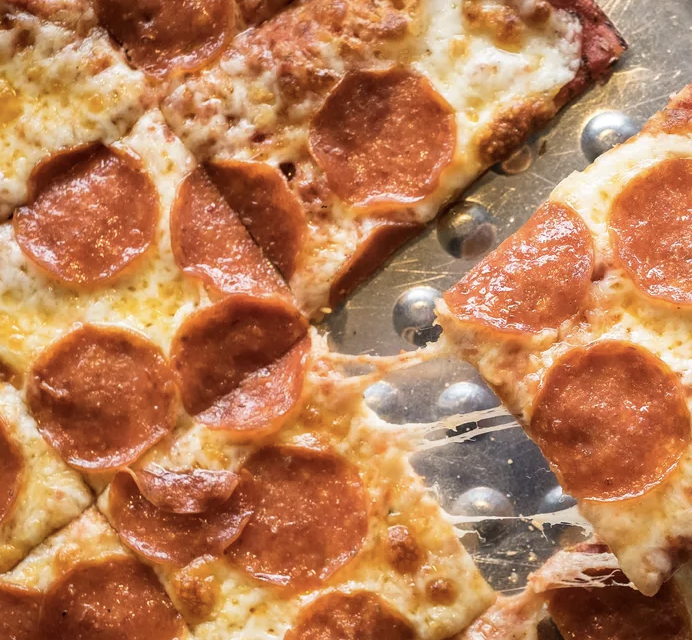
The square cut is one of the easiest ways to identify tavern-style Chicago style pizza. Instead of producing a ring of large triangular slices, a grid cut creates small corner pieces, edge pieces and center squares.
That format works especially well for sharing. A group can take smaller portions, sample different toppings and come back for another piece without committing to a large wedge. It also creates the much-discussed center squares, which have no outer crust edge at all.
Home Run Inn’s tavern-style page explains that pizza was served in small square pieces on napkins in the family tavern, making it easy to eat alongside a drink. That serving style became part of the identity of the pizza itself, not just a different way to use a cutter.
Toppings Feel Different on Deep Dish and Tavern Style
The same topping can eat very differently depending on the crust beneath it. On deep dish, the toppings become part of a thick layered structure, with sauce, cheese and fillings stacked inside the raised crust.
On tavern-style Chicago style pizza, toppings are spread across a much thinner base. It means each square can deliver crust, sauce, cheese and toppings in a compact bite.
Sausage, pepperoni, vegetables and other familiar choices work naturally with the grid cut because the toppings are distributed across many smaller pieces. In other words, Chicago style pizza changes dramatically depending on the foundation under those toppings.
Where Home Run Inn Fits Into Chicago Tavern-Style History
Home Run Inn’s place in Chicago style pizza history comes directly from its tavern origins. The company traces its pizza recipe to the early 1940s and still centers the crisp, square-cut tavern style in its brand today.
The tradition now extends beyond the restaurant. Home Run Inn offers frozen tavern-style pizzas made from the family recipe, and its Chicagoland pizzerias continue serving the style locally. In 2024, Home Run Inn also worked with National Day Calendar to establish National Tavern-Style Pizza Day on October 22.
For anyone trying to understand why Chicagoans talk about thin crust with the same pride visitors bring to deep dish, Home Run Inn offers a direct connection to the neighborhood tavern tradition that helped make square-cut pizza part of the city’s identity.
Which Chicago Style Pizza Should You Choose?
There isn’t a single right answer. Deep dish is a strong choice when you want a thicker crust, layered fillings and a substantial sit-down meal. Tavern style makes sense when you want crisp thin crust, smaller pieces and a pizza that is easy to share around the table. That choice is part of what makes Chicago-style pizza so varied.
Trying both is also the simplest way to understand the contrast. Chicago style pizza is not one rigid formula. It is a city tradition with multiple branches, each shaped by where and how people gathered to eat it.
Conclusion
Chicago style pizza can mean a towering deep dish pie, but it can also mean the thin, crisp, square-cut tavern pizza served in neighborhood spots for generations.
Deep dish emphasizes height, layers and a longer bake, while tavern style favors crunch, shareable squares and an easygoing table experience. Home Run Inn’s South Side roots make it part of that second tradition and a lasting example of Chicago’s tavern-style story.
Ready to try the square-cut side of Chicago pizza? Find Home Run Inn pizza near you and bring tavern-style tradition to your next pizza night.